
🦀 Keeping Up With Diesel
Today’s Issue: Why Rust, Gotchas of Making a Multiplayer Engine in Rust, and Tales of a Curious GreptimeDB Advocator


Hello, Rustaceans
This issue is a little late, thanks to some unavoidable chaos behind the scenes, but hey, better late than never, right? We hope you’ll forgive us this time.
In this issue, we’ll be highlighting the new features introduced in Diesel v2.3.0, spotlight an amazing Rust project, and share 10 incredible links of the week.
Here’s issue 86 for you!
MAIN NEWS
🦀 Keeping Up With Diesel
When we first wrote about Diesel back in issue 32, they had just released v2.2 with some new features. Fast forward to last week and v2.3.0 is out, bringing with it some much-requested improvements.
Top of the feature highlight is the shiny new #[derive(HasQuery)], which basically lets you point at a struct and say, “Yo, go get me the data.” It’s a huge quality-of-life bump, no more juggling Selectable and Queryable.
You can now reuse base queries across multiple structs, which is the ORM equivalent of discovering your microwave has an air fryer mode.
But wait, there’s more: window functions are finally a thing. You can now do fancy SQL analytics like ranking employees by salary or calculating averages per department, all while Diesel holds your hand to make sure your queries aren’t accidentally summoning Cthulhu.
And if you’ve ever wanted to run Diesel in a browser (because who doesn’t dream of debugging databases inside Chrome dev tools?), SQLite now works with WASM out of the box.
Postgres fans also get some love with extended support for ranges, multiranges, arrays, and JSON functions, while SQLite picks up JSON/JSONB tricks of its own. Basically, Diesel 2.3 is trying to make “ORM pain” a thing of the past, or at least, the less traumatic kind of pain.
So if you’re tired of writing spaghetti SQL, this release might just be the caffeine shot your queries need.
This release doesn’t include any major breaking changes, so you should be mostly fine when upgrading.
Help Us Improve Rust Bytes
We just launched a short survey to better understand your needs and how we can make Rust Bytes even more useful (and fun) for you.
Your feedback means a lot, take a minute to share your thoughts.
PROJECT SPOTLIGHT 💡
Dora
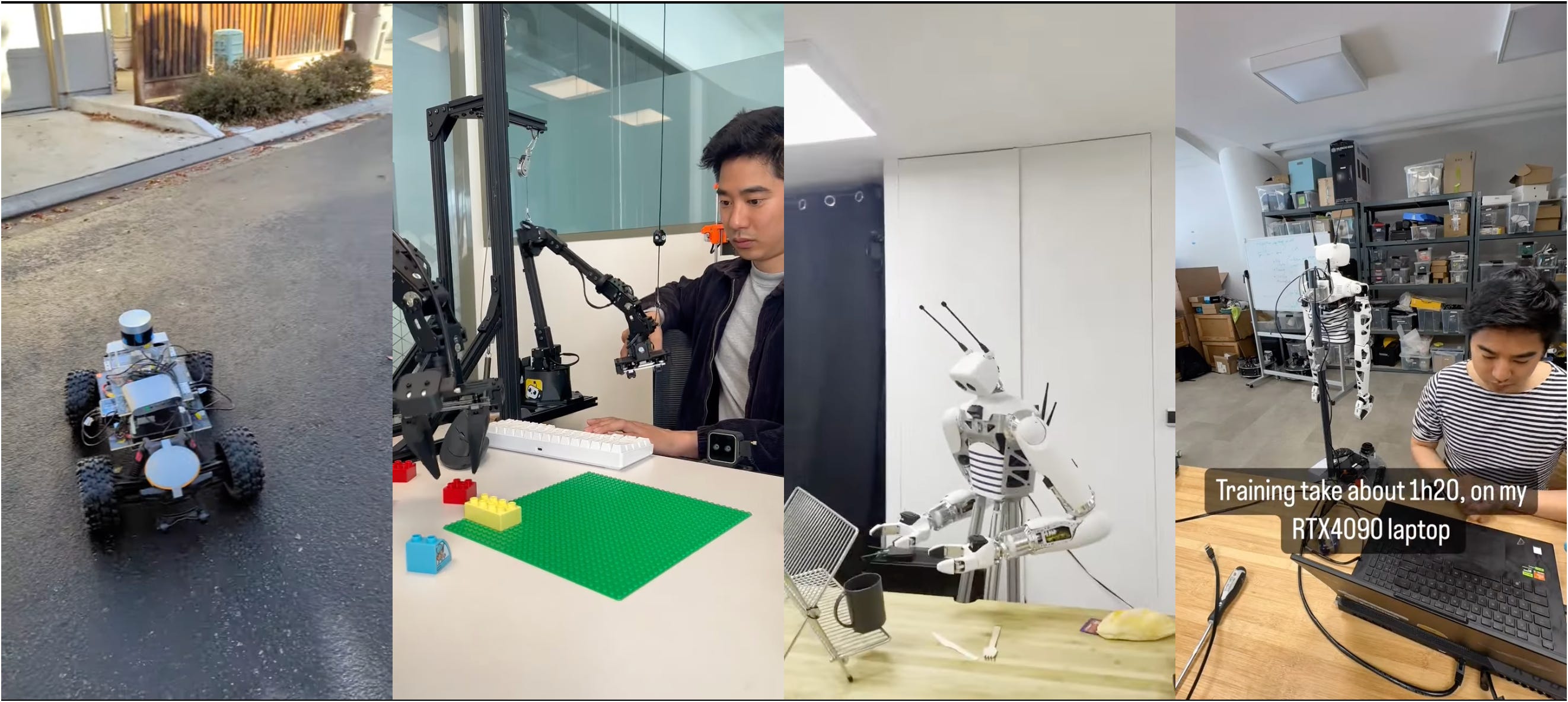
Dataflow-Oriented Robotic Architecture(DORA) is middleware designed to streamline and simplify the creation of AI-based robotic applications.
It offers low latency, composable, and distributed dataflow capabilities. Applications are modeled as directed graphs, also referred to as pipelines.
Robotics and AI devs need something that can handle distributed dataflows, crunch heavy workloads, and still play nice with Python, Rust, and C++.
It’s features include:
Plug-and-play nodes - Comes with a buffet of pre-packaged nodes, YOLO, CUDA, PyTorch, Mediapipe, you name it, for faster prototyping.
Arrow-powered communication - Zero-copy data format for lightning-fast message passing without serialization drama.
Cross-language, cross-platform - Python, Rust, C++, Linux, macOS, even Windows, Dora’s got you covered.
If you’re tired of robotics frameworks that feel like duct tape over duct tape, Dora-rs gives you modular, low-latency pipelines that actually deliver.
Dora is open-source on GitHub at https://github.com/dora-rs/dora.
AWESOME LINKS OF THE WEEK 🔗
The Rust Language Team released the Variadic Generics Micro Survey with the goal of collecting community sentiment and use cases around variadic generics in Rust, how people feel about them and how they’d use them. In other news, crates.io just had two attack surfaces pop up based on malicious crates
faster_logandasync_println.Jon Gjengset (author of Rust for Rustaceans) gave a talk on Sguaba: Type-Safe Spatial Math in Rust, demonstrating how to handle coordinate systems in software, especially when working with real-world spatial data. [video]
Handy is a free open-source speech-to-text app written in Rust.
Yihong wrote From a Curious Outsider to a GreptimeDB Advocator, sharing his journey of becoming a top contributor, learning Rust, optimizing performance, contributing to multiple projects, and uncovering the human side of open source.
Cloudflare wrote a deep-dive announcement about their migration from FL1 (an aging NGINX + LuaJIT–based system) to FL2, a new Rust-powered core system that now handles the bulk of Cloudflare’s request processing.
Roland HALLER took yet another swing at the timeless question: Why Rust?
Max Inden wrote how Firefox replaced its old UDP I/O stack with a new Rust-based implementation (quinn-udp) to handle HTTP/3 traffic more efficiently and securely.
After two years in the works, the Boa team has released temporal_rs, a Rust date/time library with full calendar and time zone support, inspired by ECMAScript’s Temporal API.
The brilliant Rustaceans over at Apache have released Sedona, a single-node analytical database engine with geospatial as a first-class citizen.
Andres Franco (Software Engineer, CEO) wrote about the gotchas of making a multiplayer engine in Rust and how it came to be.
CodeCrafters: Become a Better Rust Engineer
CodeCrafters created amazing Rust courses that push your skills beyond the basics.
You’ll have fun building real-world projects from scratch, including Git, Docker, Redis, Kafka, SQLite, Grep, BitTorrent, HTTP Server, an Interpreter, and DNS.
The courses are self-paced, so you can learn at your own speed. If you’re itching to level up your Rust skills, these courses are perfect for you.
Join for free and get 40% off when you upgrade. [affiliate]
SUPPORT RUST BYTES
You’re Rust Bytes’ biggest fans, and we love to see it.
Here’s how you can help:
❤️ Recommend Rust Bytes to your friends.
🤳 Connect with us on our socials: X, BlueSky, Mastodon, Publication.
☕️ Buy our editors a coffee.
📨 Email us at rustaceanseditors@gmail.com for sponsorship, feedback or ideas.
Last week was hectic and I couldn’t get an issue out, thanks for sticking with us!
That's all for now, Rustaceans.
John & Elley.