
🦀 Zed Has Finally Grown Up
Today’s issue: Warp is now open-source, Red Hat is hiring a Rust Engineer, and Your Clippy Config Should Be Stricter

Happy new month, Rustaceans!
In this issue, we’re looking at the big news: Zed is now stable, share a useful Rust tip, spotlight a project, and highlight 10 awesome links of the week.
Here’s issue #117.
MAIN NEWS
Zed Has Finally Grown Up
If there’s one project that’s genuinely pushed boundaries and helped put Rust on the modern tooling map, Zed editor is firmly in that conversation.
Last week, the team announced their long-awaited 1.0 stable release, a milestone that feels thoroughly earned.
This didn’t happen overnight. It came after more than 1,000 releases, countless public iterations, and a very transparent process of figuring things out in real time.
I remember writing about Zed in Issue #12 (2024) when it went open source. Fast forward to now: 80k+ GitHub stars, cross-platform maturity on macOS, Linux, Windows, and a growing community of developers who actually daily-drive it.
Not bad for something that started as an ambitious experiment.
The team behind Zed includes veterans from Atom, Tree-sitter, and Electron. They knew the pain of sluggish, layered tooling. So they rebuilt from first principles in Rust with a custom GPU-accelerated framework (GPUI). The result? Sub-second startups, crisp 120 fps responsiveness, and memory usage that embarrasses Electron apps. Multiplayer collaboration and AI agent features also feel native.
They choose Rust because it delivers the performance and safety invariants we crave. You feel it in the buttery scrolling, instant project switching, and how the editor simply stays out of your way during deep focus.
There’s something refreshing about watching a team reject legacy hacks and intentional design shine through. From bookmarks and polished Git integration to solid language server support, 1.0 makes Zed production-viable without sacrificing that snappy soul.
From my perspective, I daily drive Zed and this 1.0 isn’t the finish line, it’s where things get interesting.
Stability builds trust. More developers will adopt it, extend it, and build real workflows around it. Huge credit to Nathan, Max, Antonio, and the entire team for sticking with it through the messy public beta phase.
Pulling off a polished 1.0 in Rust is a statement: thoughtful systems win. If you’re chasing flow-state editing, give Zed a spin on your largest project. You might not look back.
RUST TIP 🦀
Last week we shared a tip on using #[inline(never)] + #[inline(always)] more surgically. Now, onto this week’s tip.
const generics + generic_const_exprs (nightly) for compile-time sized things
You can do crazy things like:
struct RingBuffer<T, const N: usize> where [(); N.is_power_of_two() as usize - 1]:,Or mask calculations at compile time. The ecosystem is slowly moving here.
Check out the docs for Generic parameters and the relevant tracking issue for complex generic constants.
PROJECT SPOTLIGHT 💡
Asciigraph-rs
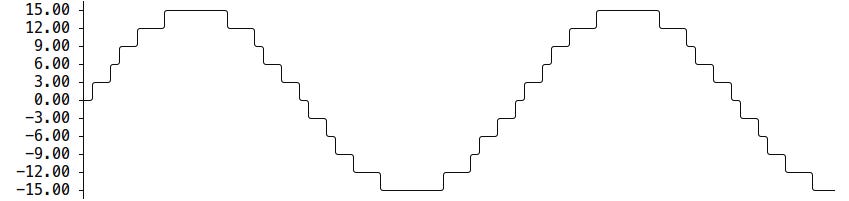
Asciigraph-rs is a Rust crate to make lightweight ASCII line graph in command line apps.
Let’s be honest, most CLI tools treat visualization like an afterthought. You either dump raw numbers and pretend it’s fine, or you spin up a full dashboard just to see a trend.
What makes it stand out:
You can pipe data into it and watch your terminal come alive. It’s basically Grafana… if Grafana had zero setup and lived in your shell.
Multi-series + colors + legends. You get multiple datasets, ANSI colors, and legends.
Highly customizable axes and formatting. Want GiB instead of raw numbers? Custom ticks? Precise labels? It’s all configurable without fighting the API.
And the good part? it’s open-source at https://github.com/neneodonkor/asciigraph-rs.
AWESOME LINKS OF THE WEEK 🔗
The Rust mentorship team announced Google Summer of Code 2026 selected projects. Also Rust 1.97 raises CUDA target baseline to PTX 7.0 and SM 7.0, dropping older GPUs to improve correctness and performance.
In other news, the Rustaceans behind Warp finally did the obvious thing and open-sourced it. Warp is a modern terminal for agentic coding, built in Rust.
Matthias Endler wrote bugs Rust won’t catch, showing how uutils CVEs expose logic, TOCTOU, and boundary issues beyond Rust’s memory safety guarantees.
Rain, the author of cargo-nextest, gave a talk on faster Rust testing at scale, discussing modern testing workflows. [video]
Red Hat is hiring a full-time Senior Rust Engineer in Raleigh. Translation: memory bugs need to start fearing for their lives.
Chris Dell built a $0.09 RISC-V handheld gaming console in Rust, making it playable through tight memory optimization and fixed-point math.
Evan Schwartz has already handed you plenty of reasons to stop being generous with your Clippy config. Make it stricter.
Denys Séguret showed how boxing cut memory by restructuring structs, skipping empty allocations, and optimizing serde for sparse data.
Md Kaif open-sourced scamp, a tiny pixel cat that roams your terminal, naps on the job, and occasionally remembers to groom.
Rust scientific computing workshop calls for talk and tutorial proposals submissions are due June 5.
CodeCrafters: Become a Better Rust Engineer
CodeCrafters created amazing Rust courses that push your skills beyond the basics.
You’ll have fun building real-world projects from scratch, including Git, Docker, Redis, Kafka, SQLite, Grep, BitTorrent, HTTP Server, an Interpreter, and DNS.
The courses are self-paced, so you can learn at your own speed.
Join for free and get 40% off when you upgrade. [affiliate]
X | BlueSky | Mastodon | GitHub | LinkedIn | Buy us coffee | hello@rustbytes.com
Not feeling great this Sunday, and the weather isn’t helping. Stay warm and stay safe.
See you next week!
John & Elley.
I think I might finally switch from NeoVim to Zed. It’s become too good to ignore. The live sharing and collaboration feature, agentic coding, built-in AI autocomplete, and more, are all such high quality that NeoVim can no longer keep up, not even in speed. I tried it again today with a buddy. We pair programmed and it was sublime! (Pun intended)